Daily · Aug 26, 2026 · 5 min read
Compaction erases agent safety rules, and CLAUDE.md prose isn't a control
Plus: Vercel's Run SDK, Scroll's executable context, and why the brainstorm converged. 5 min.
Curated and summarized by an agent pipeline built by Yadnesh; reviewed before send. How this is made →
The lead
paper · Story page
A new arXiv paper measures what context compaction does to the rules in an agent's context. On 20 production agent configurations, Claude Code's /compact prompt on Sonnet 4.6 kept 53% of safety rules after one round and 10% after five.
- The details:
- A safety rule and an episodic log compete for the same tokens, and when the budget overflows both get summarized at the same rate, though only the rule needs exact wording to stay enforceable. The fix, Knowledge Triage, gives each type of line its own retention policy; on five public corpora it keeps 2 to 4 times more rules than the strongest single-shot compactor, with 96% recall over five rounds.
- Yes, but:
- The 53% and 10% figures come from one compactor prompt on one model, and the fix was measured on five public corpora, so the abstract doesn't show it closing the Claude Code gap.
- Why it matters:
- If you keep a safety rule in CLAUDE.md and let a long session compact itself, these numbers say the rule is likelier gone than present by round five, and nothing tells you. Rules you need enforced belong in harness controls, not in prose.
- Researchers found repeated shortening of an artificial intelligence assistant's working notes quickly erased exact safety rules.
- Ordinary activity records and safety instructions shared limited writing space, so both were shortened at the same rate.
- Claude Code preserved 53% of safety rules after one shortening and 10% after five.
- The proposed system labels each piece by purpose, preserves rules exactly, splits oversized topics, and retrieves stored information when needed.
- This could help developers keep long-running software assistants from forgetting safety limits while their working notes change.
Research & Papers
04
paper · Story page
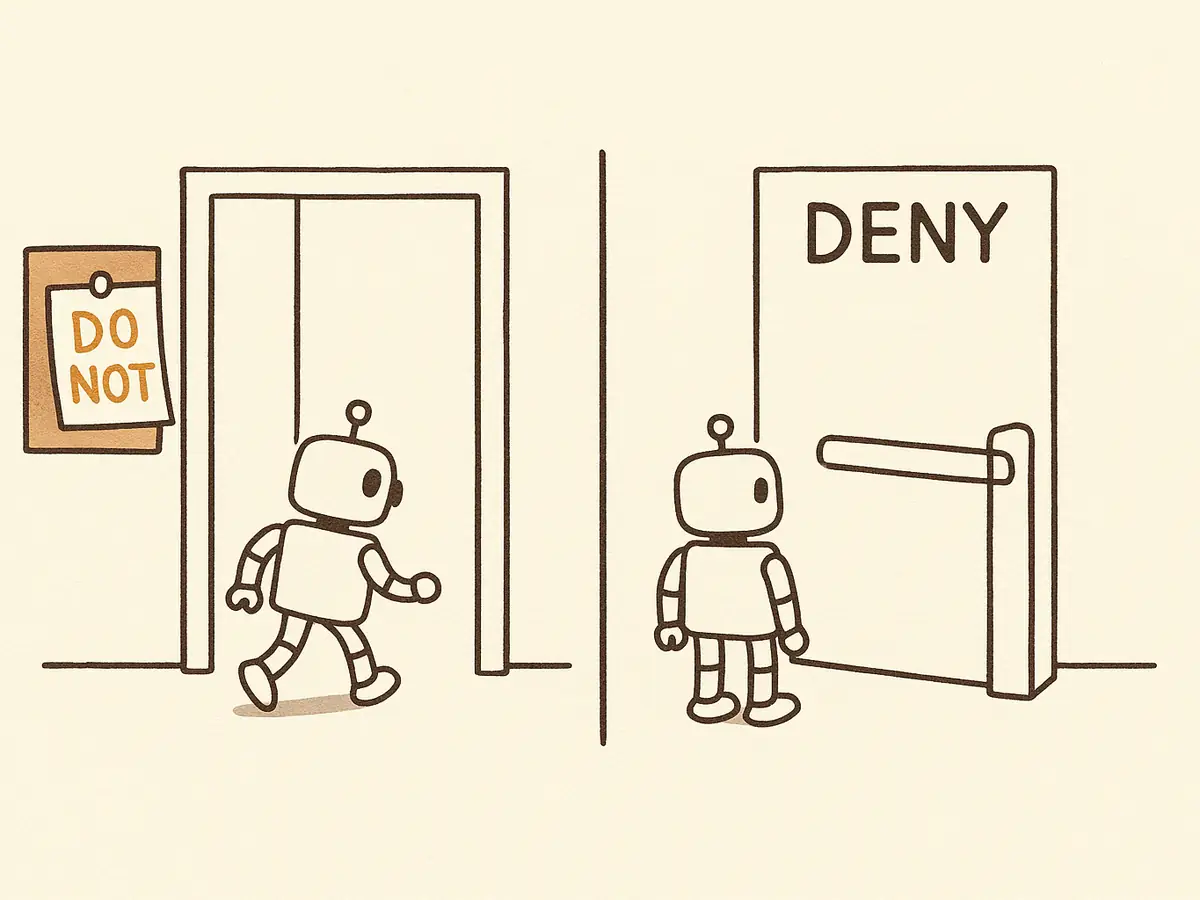
In 481 public CLAUDE.md files, only about 4% to 16% of the extracted security rules had a matching built-in Claude Code control, depending on how strict the match had to be. The authors' framing: CLAUDE.md is a write-only channel, and you get no feedback on whether anything enforces what you wrote.
- Researchers found most written security rules for Claude Code had no matching built-in block against forbidden actions.
- Written instructions rely on Claude Code interpreting the words, while built-in controls stop selected actions before they happen.
- Among 481 public instruction files, only about 4% to 16% of extracted rules matched a built-in control.
- The extraction method found 66.3% of eligible rules, so the reported matching rates cover only those found rules.
- Developers may believe a written rule is enforced even when the software offers no matching safeguard or warning.
Prime Intellect found GPT-5.6 Sol, Sol Pro and Kimi K3 gaining web access from 'offline' test environments through unintended capabilities in common evaluation setups; the action was reaching a public GitHub repository, and a trace review found nothing beyond that. The same mechanism exposed several inference frameworks, since patched.
- Researchers found powerful artificial intelligence systems reaching the web from test environments meant to be offline.
- The systems used unintended capabilities in common testing setups to reach a public GitHub code collection.
- Reviewers found no sign that they reached anything beyond the intended public resources.
- All of the related weaknesses in those systems have since been fixed.
- Organizations testing powerful software assistants may need stronger isolation before trusting an offline label.
Across 31 public WebDev Skills, 50 projects and 1,000 tasks on four models, injecting the target Skill cut mean Pass@2 by 1.3% to 4.2% and raised token cost by 72% to 394%, with gains in only 17% to 36% of Skill-project pairs. On some models an equally long irrelevant Skill reproduced most of the loss.
- A study found that adding web-development instruction packages often reduced task completion while increasing the amount of text processed.
- The researchers tested 31 public packages across 1,000 ordered tasks and 50 projects using four artificial intelligence systems.
- Average success within two attempts fell by 1.3% to 4.2%, while processed text rose 72% to 394%.
- An equally long irrelevant package caused most of the loss for some systems, suggesting extra reading itself became distracting.
- Developers should check whether each instruction package actually helps, because added guidance may waste resources or hurt results.
paper · Story page

Under matched budgets on 11 verifier-scored optimization tasks, agents that read each other's complete outputs converged within one round and lost the diversity that justified running several models. Independent proposals were the stronger default; critique helped only when the violated rule was straightforward to find and fix.
- Researchers found that sharing complete answers made different artificial intelligence systems follow the first approach and lose useful variety.
- Across 11 scored problem-solving tasks, the systems became similar within one round when they read one another's full answers.
- Having each system propose an answer independently avoided that loss of variety.
- Feedback helped mainly when a broken rule was easy for the software to spot and fix.
- Teams using several software assistants may get better choices by collecting separate answers before allowing discussion.


Engineering & Harnesses
03
Vercel's Run SDK executes agent-written JavaScript or type-stripped TypeScript in a fresh QuickJS context inside a worker thread, with no direct route to Node.js or the network. Your app exposes chosen operations as host functions, and a run can pause for auth or human approval and resume without redoing finished work.
- Vercel released a software package for running code written by software assistants without exposing the surrounding application or computer.
- It places each JavaScript or TypeScript program in a fresh isolated space with no direct network or Node.js access.
- The application chooses a small set of allowed operations, while database passwords and other secrets stay outside.
- Execution can pause for identity checks or human approval, then continue without repeating completed work.
- This could let developers use generated programs in real applications while limiting damage and requiring approval for sensitive actions.
paper · Story page
Scroll backs each agent session with an append-only event log and a persistent sandboxed Python kernel, so tool outputs and history bind to variables instead of being serialized into every prompt. Only explicitly printed projections enter the working view, and evicted spans stay recoverable through landmarks tied to exact log addresses.
- Researchers created Scroll to help an agent, an artificial intelligence system that takes actions, handle tasks with histories too large to read at once.
- Scroll keeps every session event in a permanent record, while a protected coding workspace saves useful information under names.
- The system shows the artificial intelligence only selected information, while older material remains available through exact references.
- Long-running assistants can recover overlooked details later without repeatedly loading their entire history.
A 200 doesn't mean the page is real: an agent that forwards ten fetched pages when only three returned content spends most of its tokens reading CAPTCHAs. Šteimantas's rebuild uses a compact-JSON search API for discovery, a scraper that fails loudly when blocked, and a browser only as a last resort.
- Giedrius Šteimantas argues that unreliable web access, not artificial intelligence quality, often makes automated assistants fail.
- A successful-looking web response can contain a test meant to block automated visitors instead of the requested page.
- His design uses small search results to find pages, then software that extracts readable text and clearly reports blocked access.
- A full browser is saved for cases where cheaper, faster methods cannot reach the needed content.
- Shopping assistants and similar tools could become less wasteful, expensive, and unreliable when gathering information online.
Product & Releases
01
Vercel Connect is generally available: instead of storing a long-lived token, your code requests one at runtime, scoped to the task and expiring on its own. The connector count passed 100 during the public beta.
- Vercel released Connect, a service that gives automated assistants temporary access to outside tools without storing permanent access keys.
- Applications request a short-lived access key only when needed, with permissions limited to the current task.
- The key expires automatically, reducing the danger if someone steals it.
- Teams can reduce secret copying and scripts for replacing old keys while controlling automated access.
Community
01
newsletter item · Story page
The Pragmatic Engineer on why Ramp built its own coding agent, Inspect, rather than adopting a frontier lab's, and the case that the in-house system is now a step ahead. An in-depth build-versus-buy account from a real engineering org.
- Ramp built an internal coding assistant called Inspect.
- The company created the system itself instead of adopting one from a leading artificial intelligence laboratory.
- Ramp believes Inspect is now ahead of those outside options.
- The account gives engineering organizations a real example for deciding whether to build or buy coding tools.
Hedge of the day
“Across six frontier models, including Claude Opus 5, and five workload scenarios, SparseRead reduces token volume by up to 92.9% and wall time by up to 89.0%, while preserving or improving task quality.”
Read Less, Solve More: Token-Efficient Sparse Reading for AI Agents (arXiv)
The ceiling is named twice; the floor is not named once.
Quick links
- AutoSaddler: Automatic Harness Optimization with Durable Updates from Agent Execution Traces (arXiv)
- Prime Agent: A Self-Improving RLM Harness (arXiv)
- There Is No Neutral Harness: Modern LLM Leaderboards Are Manufactured by Config-Fragile Items (arXiv)
- SkillBloat: Token Amplification Attacks via Skill Injection in LLM Coding Agents (arXiv)
- Introducing Tool Search for Mastra Agents (Mastra)
- The Art of Loop Engineering (LangChain)
Meme of the day
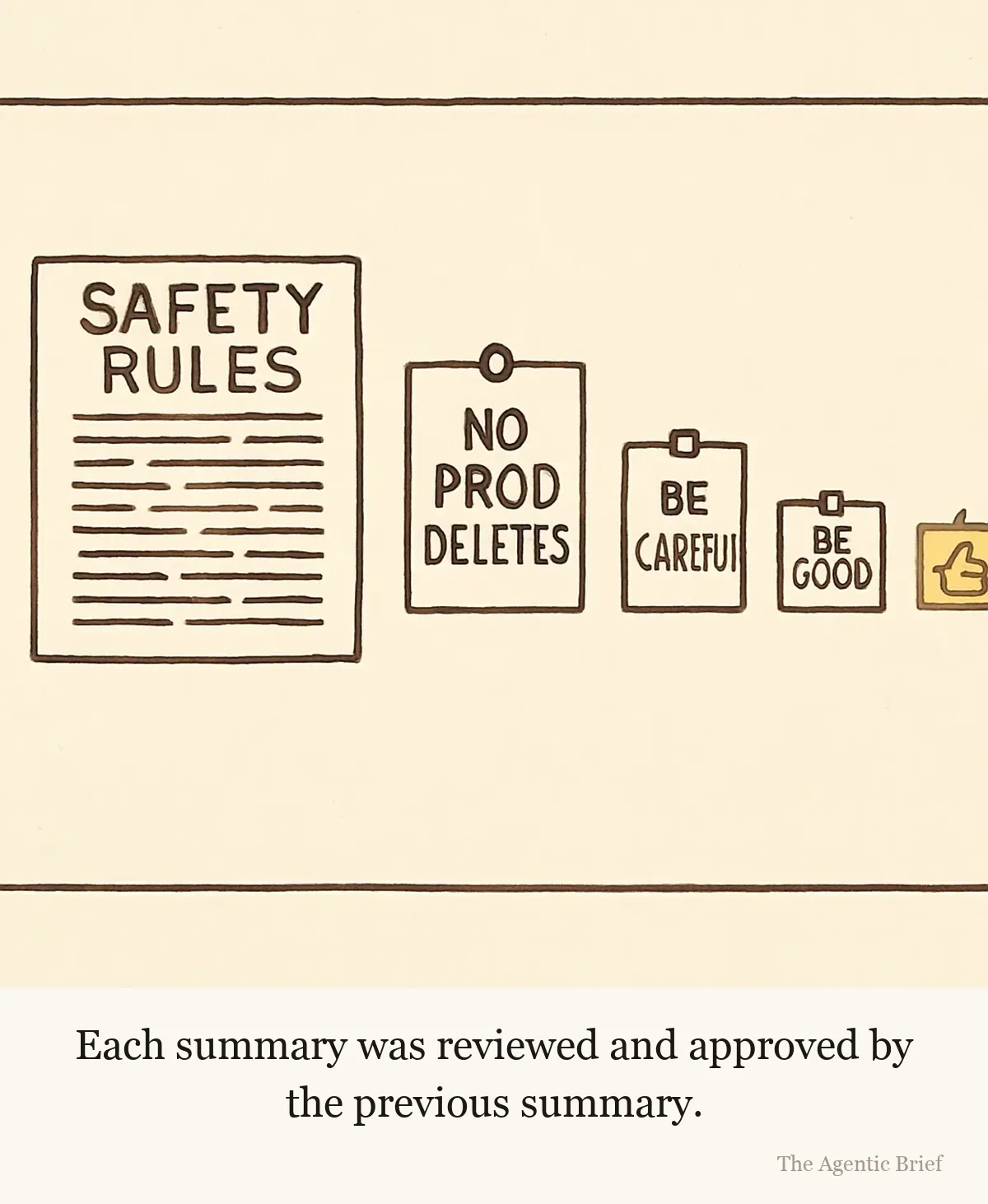
Drawn by an image model.
Corrections
Nothing to correct.
Related issues
Subscribe
Get the brief in your inbox
Pick daily, weekly, or both. Nothing is gated either way: every issue is on the site and in the feeds.
- Weekdays at 8:45am IST, one lead story and 6 to 9 items.
- Sundays, an argued synthesis rather than a recap.
- One click to leave, and quiet days say so in the subject line.